Skip to content
Dillman Family Association logo. © Dillman Family Association.

Dillman Family Association

Understanding the Heritage of Dillman Families and All Variant Spellings

Menu
  • Dillman Family Association
  • Start Here — New to Dillman Research?
  • Dillman DNA Project
    • Dillman DNA Participants
    • Family Group Sheets
    • Order A DNA Kit
    • Dillman DNA Project Donors
    • DNA Information Links
  • DFA Genealogical Conferences
    • Dillman Family Reunions
  • Research Resources
    • The Dillman Surname
    • Dillman Family Settlement Concentrations and Migration Patterns
    • Dillman Family Association Library
    • Dillman Photographs
    • Helpful Tips and Hints
    • Military Links
    • Genealogical Will
    • Frequently Asked Questions
    • Dillman Family Research Tips
  • Reference & Resources
    • Quarterly Newsletter
    • DFA Newsletters
    • Dillman Bibliography: Published Genealogies and Family Histories
    • Discovering Dillman Families Throughout the World
  • Forums
  • Join Us
    • Registration
    • Membership
  • DFA Blog
  • About DFA
    • History of the DFA
    • Contact Us
    • DFA Officers and Committees
    • Data Collection and Privacy Policy at Dillman Family Association
  • Member Login
    • My Account
    • Password Reset
    • Profile

Fall Article Calendar: What’s Coming to the DFA Blog Through the New Year

No Comments
| Website News

More than thirty new articles are scheduled on the DFA blog between now and early January, covering Dillman family history, DNA, research methods, software and news. Here is the currently scheduled calendar.

Share this:

  • Share on Facebook (Opens in new window) Facebook
  • Share on X (Opens in new window) X
  • Share on WhatsApp (Opens in new window) WhatsApp
  • Share on Mastodon (Opens in new window) Mastodon
  • Share on Tumblr (Opens in new window) Tumblr
  • Print (Opens in new window) Print
  • Share on Bluesky (Opens in new window) Bluesky

Read More »

Where They Went, Part Two: Geographic Settlement Patterns in 199 Family Groups

No Comments
| Dillman Families
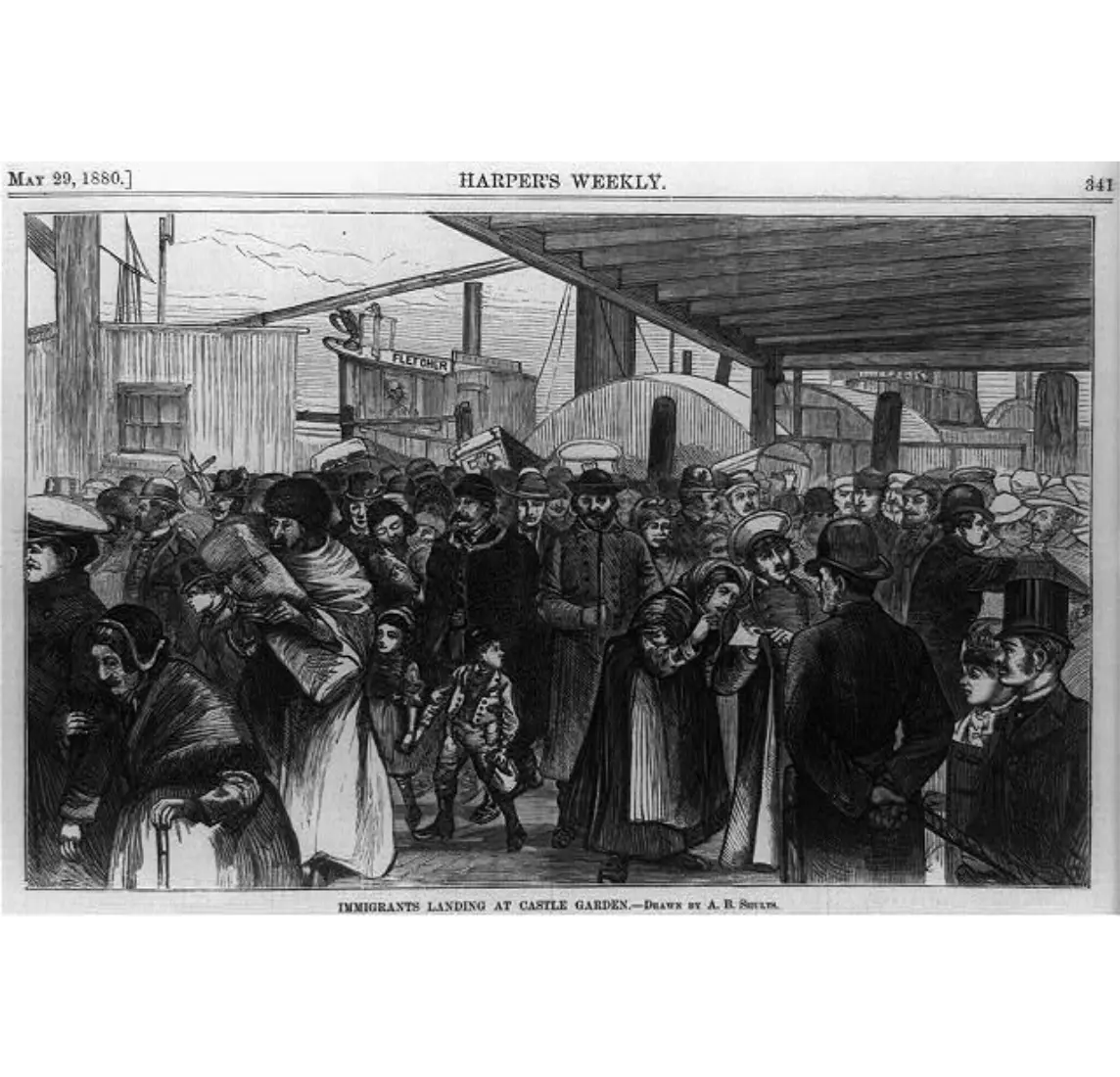
Historical illustration of Castle Garden, America's first official immigration processing station in New York, which operated from 1855 to 1890 before Ellis Island opened.

Of the 199 Dillman family groups now documented, 140 trace their origins to Germany — still concentrated in Hesse, the Rhineland, and Baden. New York remains the gateway and the Midwest the primary destination, with one real correction: the 1930–1945 immigration gap wasn’t actually empty.

Share this:

  • Share on Facebook (Opens in new window) Facebook
  • Share on X (Opens in new window) X
  • Share on WhatsApp (Opens in new window) WhatsApp
  • Share on Mastodon (Opens in new window) Mastodon
  • Share on Tumblr (Opens in new window) Tumblr
  • Print (Opens in new window) Print
  • Share on Bluesky (Opens in new window) Bluesky

Read More »

DFA Website Update: New Officers, a Fillable Membership Form, and Updated Contacts

No Comments
| Website News

The DFA has new officers for 2026–2028, a fillable membership form, and contact addresses that follow the office instead of the person. Here is what changed on the website this month.

Share this:

  • Share on Facebook (Opens in new window) Facebook
  • Share on X (Opens in new window) X
  • Share on WhatsApp (Opens in new window) WhatsApp
  • Share on Mastodon (Opens in new window) Mastodon
  • Share on Tumblr (Opens in new window) Tumblr
  • Print (Opens in new window) Print
  • Share on Bluesky (Opens in new window) Bluesky

Read More »

DFA Most Wanted: Family Group 43

No Comments
| DFA Most Wanted

A WWI German Army veteran whose son became a minister. No DNA connection to other German lines yet. Could you be connected?

Share this:

  • Share on Facebook (Opens in new window) Facebook
  • Share on X (Opens in new window) X
  • Share on WhatsApp (Opens in new window) WhatsApp
  • Share on Mastodon (Opens in new window) Mastodon
  • Share on Tumblr (Opens in new window) Tumblr
  • Print (Opens in new window) Print
  • Share on Bluesky (Opens in new window) Bluesky

Read More »

The Professionalization of Genetic Genealogy: Standards, Certification, and What It Means to Hire an Expert

No Comments
| Industry News
ISOGG logo: circular badge for International Society of Genetic Genealogy, featuring a DNA ladder and the motto 'Promoting DNA testing for genealogical research' with EST. 2005.

Genetic genealogy has professionalized rapidly — with BCG certification pathways, the IGGAB accreditation for forensic genealogy, and ISOGG standards shaping how practitioners are evaluated. Understanding what these credentials mean, when to hire a professional, and how to find one is increasingly important for researchers facing complex DNA questions.

Share this:

  • Share on Facebook (Opens in new window) Facebook
  • Share on X (Opens in new window) X
  • Share on WhatsApp (Opens in new window) WhatsApp
  • Share on Mastodon (Opens in new window) Mastodon
  • Share on Tumblr (Opens in new window) Tumblr
  • Print (Opens in new window) Print
  • Share on Bluesky (Opens in new window) Bluesky

Read More »

GenSmarts: The Add-On That Finds the Holes in Your Research

No Comments
| Sites and Software
GenSmarts logo: a green square containing a red 'G' followed by multicolored 'enSmarts' lettering on a white background.

GenSmarts doesn’t build family trees — it reads the one you already have and tells you, person by person, exactly what to search for next.

Share this:

  • Share on Facebook (Opens in new window) Facebook
  • Share on X (Opens in new window) X
  • Share on WhatsApp (Opens in new window) WhatsApp
  • Share on Mastodon (Opens in new window) Mastodon
  • Share on Tumblr (Opens in new window) Tumblr
  • Print (Opens in new window) Print
  • Share on Bluesky (Opens in new window) Bluesky

Read More »

DFA Most Wanted: Family Group 32

No Comments
| DFA Most Wanted

Two brothers, three generations of names recorded back to Trier, but no independent sourcing and no DNA test. Could you be connected?

Share this:

  • Share on Facebook (Opens in new window) Facebook
  • Share on X (Opens in new window) X
  • Share on WhatsApp (Opens in new window) WhatsApp
  • Share on Mastodon (Opens in new window) Mastodon
  • Share on Tumblr (Opens in new window) Tumblr
  • Print (Opens in new window) Print
  • Share on Bluesky (Opens in new window) Bluesky

Read More »

Painting Your Chromosomes: A Practical Guide to DNA Painter and Segment Analysis

No Comments
| Genetic Genealogy
DNA Painter logo with the slogan 'MAP DNA SEGMENTS TO YOUR ANCESTORS' on a light background.

DNA Painter transforms a list of DNA matches into a color-coded chromosome map showing which ancestors contributed which segments of your DNA. Understanding how to get segment data, what the numbers mean, and how to use DNA Painter’s tools — from the Shared cM Project to WATO to the Cluster Mapper — is one of the most practical skills in genetic genealogy.

Share this:

  • Share on Facebook (Opens in new window) Facebook
  • Share on X (Opens in new window) X
  • Share on WhatsApp (Opens in new window) WhatsApp
  • Share on Mastodon (Opens in new window) Mastodon
  • Share on Tumblr (Opens in new window) Tumblr
  • Print (Opens in new window) Print
  • Share on Bluesky (Opens in new window) Bluesky

Read More »

Citing What You Can’t Hold: Database and DNA Sources

No Comments
| Methodology & Standards

Online indexes, database entries, and DNA test results all need real citations too — Evidence Explained’s rules for sources you can’t hold in your hands.

Share this:

  • Share on Facebook (Opens in new window) Facebook
  • Share on X (Opens in new window) X
  • Share on WhatsApp (Opens in new window) WhatsApp
  • Share on Mastodon (Opens in new window) Mastodon
  • Share on Tumblr (Opens in new window) Tumblr
  • Print (Opens in new window) Print
  • Share on Bluesky (Opens in new window) Bluesky

Read More »

What’s in a Name, Part Two: Naming Patterns in 199 Family Groups

No Comments
| Dillman Families
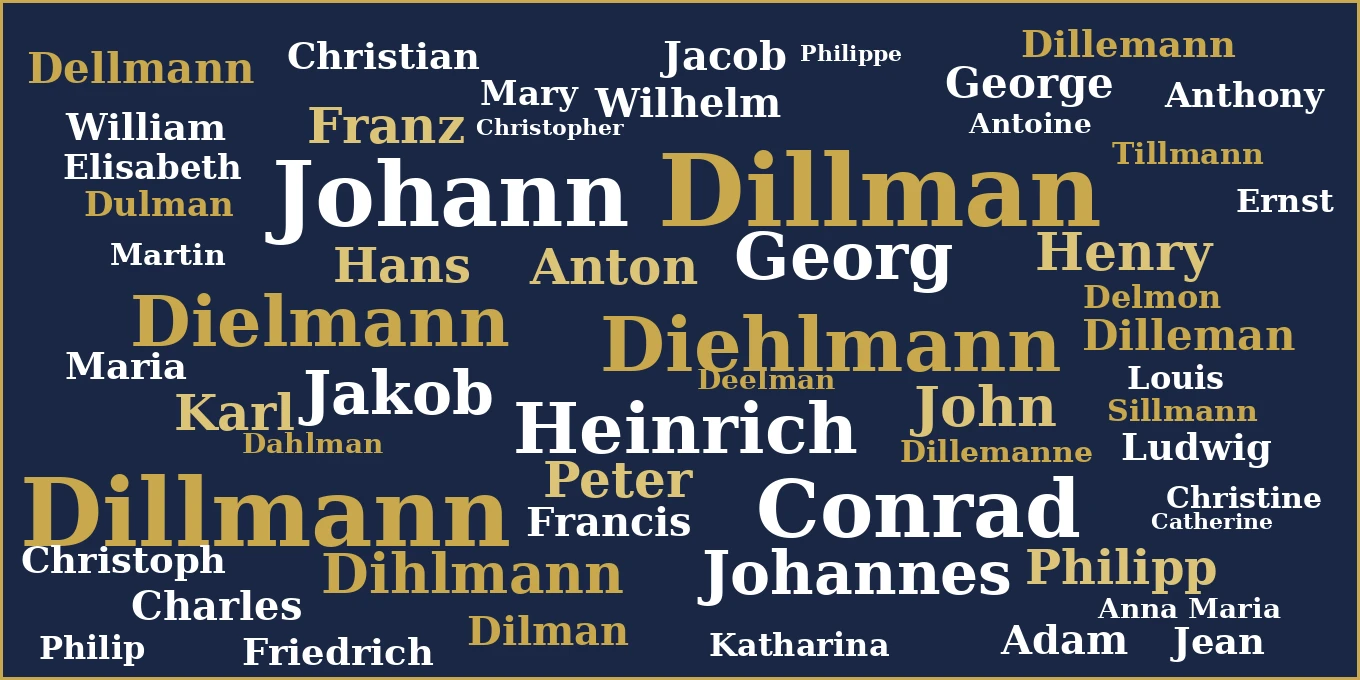
Word cloud of many German names on a dark blue background; largest names include Johann, Dillmann, Diehlmann, Conrad, Johannes, Heinrich.

The 199 family groups in the DFA database confirm earlier naming patterns — Johann’s dominance, predictable anglicization — and reveal new traditions.

Share this:

  • Share on Facebook (Opens in new window) Facebook
  • Share on X (Opens in new window) X
  • Share on WhatsApp (Opens in new window) WhatsApp
  • Share on Mastodon (Opens in new window) Mastodon
  • Share on Tumblr (Opens in new window) Tumblr
  • Print (Opens in new window) Print
  • Share on Bluesky (Opens in new window) Bluesky

Read More »

Posts pagination

Previous 1 2 3 4 … 11 Next

Follow the DFA

Find new articles and announcements on our pages:

  • Facebook
  • Bluesky
  • Tumblr
  • Mastodon

Get New Articles by Email

New DFA articles, sent to your inbox.

Post Categories

  • DFA Most Wanted (16)
  • Dillman Families (15)
  • Dillman Genealogical Conference (2)
  • Genetic Genealogy (18)
  • Industry News (20)
  • Methodology & Standards (8)
  • Sites and Software (19)
  • Website News (4)

Recent Posts

  • MyHeritage’s GAIA Research Agent: What It Does With Your Tree and What It Doesn’t
  • Your DNA, Your Property? Five States Just Passed New Genetic Privacy Laws
  • Heredis: The Best Genealogy Software You’ve Never Heard Of (Unless You’re French)
  • DFA Most Wanted: Family Group 33
  • Endogamy: When Your DNA Matches Don’t Mean What They Seem

© Dillman Family Association 2026. Powered by WordPress