Skip to content
Dillman Family Association logo. © Dillman Family Association.

Dillman Family Association

Understanding the Heritage of Dillman Families and All Variant Spellings

Menu
  • Dillman Family Association
  • Start Here — New to Dillman Research?
  • Dillman DNA Project
    • Dillman DNA Participants
    • Family Group Sheets
    • Order A DNA Kit
    • Dillman DNA Project Donors
    • DNA Information Links
  • DFA Genealogical Conferences
    • Dillman Family Reunions
  • Research Resources
    • The Dillman Surname
    • Dillman Family Settlement Concentrations and Migration Patterns
    • Dillman Family Association Library
    • Dillman Photographs
    • Helpful Tips and Hints
    • Military Links
    • Genealogical Will
    • Frequently Asked Questions
    • Dillman Family Research Tips
  • Reference & Resources
    • Quarterly Newsletter
    • DFA Newsletters
    • Dillman Bibliography: Published Genealogies and Family Histories
    • Discovering Dillman Families Throughout the World
  • Forums
  • Join Us
    • Registration
    • Membership
  • DFA Blog
  • About DFA
    • History of the DFA
    • Contact Us
    • DFA Officers and Committees
    • Data Collection and Privacy Policy at Dillman Family Association
  • Member Login
    • My Account
    • Password Reset
    • Profile

What’s in a Name: Naming Patterns in the Dillman Family Groups

No Comments
| Dillman Families
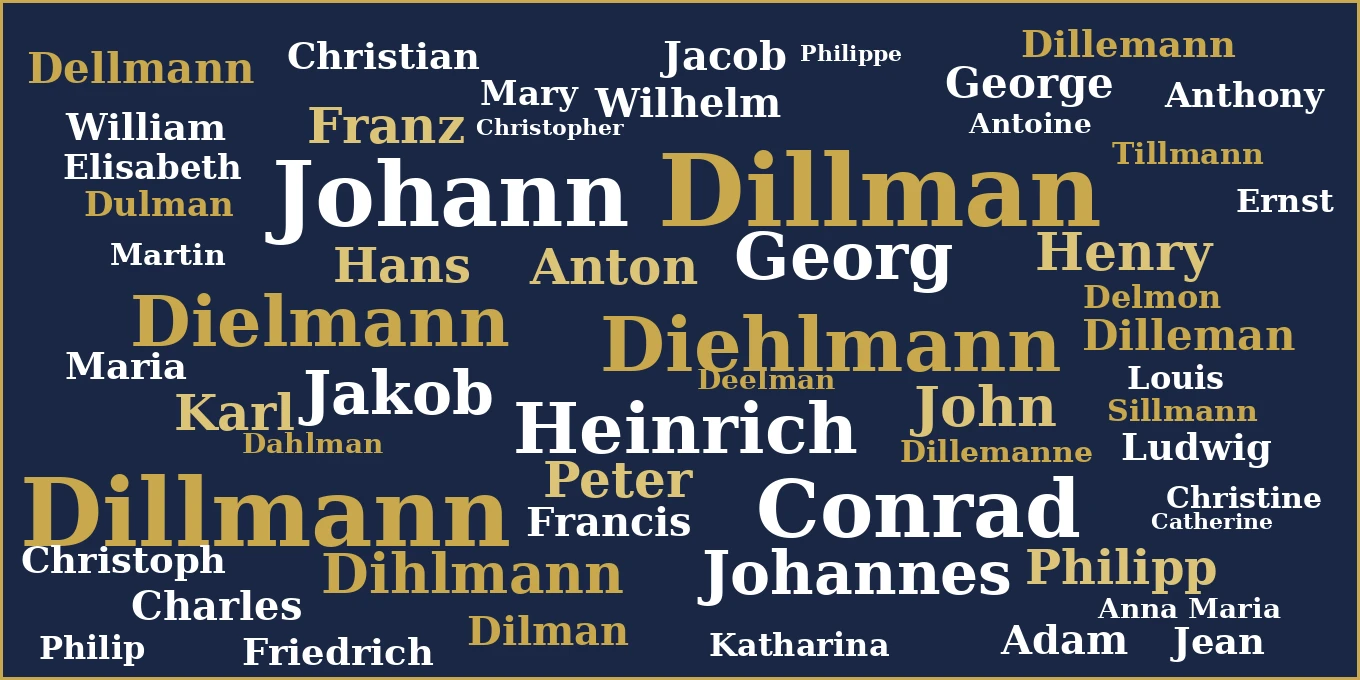
Word cloud of many German names on a dark blue background; largest names include Johann, Dillmann, Diehlmann, Conrad, Johannes, Heinrich.

The 160 family groups in the DFA database reveal consistent naming patterns across two centuries of Dillman migration — from the dominance of Johann in German records to the predictable anglicization that turned Heinrich into Henry and Georg into George at the American border.

Share this:

  • Share on Facebook (Opens in new window) Facebook
  • Share on X (Opens in new window) X
  • Share on WhatsApp (Opens in new window) WhatsApp
  • Share on Mastodon (Opens in new window) Mastodon
  • Share on Tumblr (Opens in new window) Tumblr
  • Print (Opens in new window) Print
  • Share on Bluesky (Opens in new window) Bluesky

Read More »

FamilyTreeDNA: The Specialist’s Choice for Serious Genealogical DNA Research

No Comments
| Industry News
FamilyTreeDNA (FTDNA) brand logo — © Gene by Gene, Ltd. Used for editorial purposes. Source: familytreedna.com

FamilyTreeDNA is the oldest consumer DNA testing company still operating under original ownership, and the only major platform offering all three test types: autosomal, Y-DNA, and mitochondrial. For Dillman researchers, its Y-DNA project infrastructure is unmatched anywhere else.

Share this:

  • Share on Facebook (Opens in new window) Facebook
  • Share on X (Opens in new window) X
  • Share on WhatsApp (Opens in new window) WhatsApp
  • Share on Mastodon (Opens in new window) Mastodon
  • Share on Tumblr (Opens in new window) Tumblr
  • Print (Opens in new window) Print
  • Share on Bluesky (Opens in new window) Bluesky

Read More »

Gramps: The Free, Open-Source Desktop Genealogy Software Worth Taking Seriously

No Comments
| Sites and Software
Gramps logo — © The Gramps Project. Used for editorial purposes. Source: gramps-project.org

Gramps is free, open-source genealogy software with a 25-year track record that rivals paid desktop alternatives in analytical depth and data control. For researchers who value data ownership and serious source citation, it is worth the learning curve.

Share this:

  • Share on Facebook (Opens in new window) Facebook
  • Share on X (Opens in new window) X
  • Share on WhatsApp (Opens in new window) WhatsApp
  • Share on Mastodon (Opens in new window) Mastodon
  • Share on Tumblr (Opens in new window) Tumblr
  • Print (Opens in new window) Print
  • Share on Bluesky (Opens in new window) Bluesky

Read More »

Chromosome Browsers: Seeing Your DNA in a New Dimension

No Comments
| Genetic Genealogy
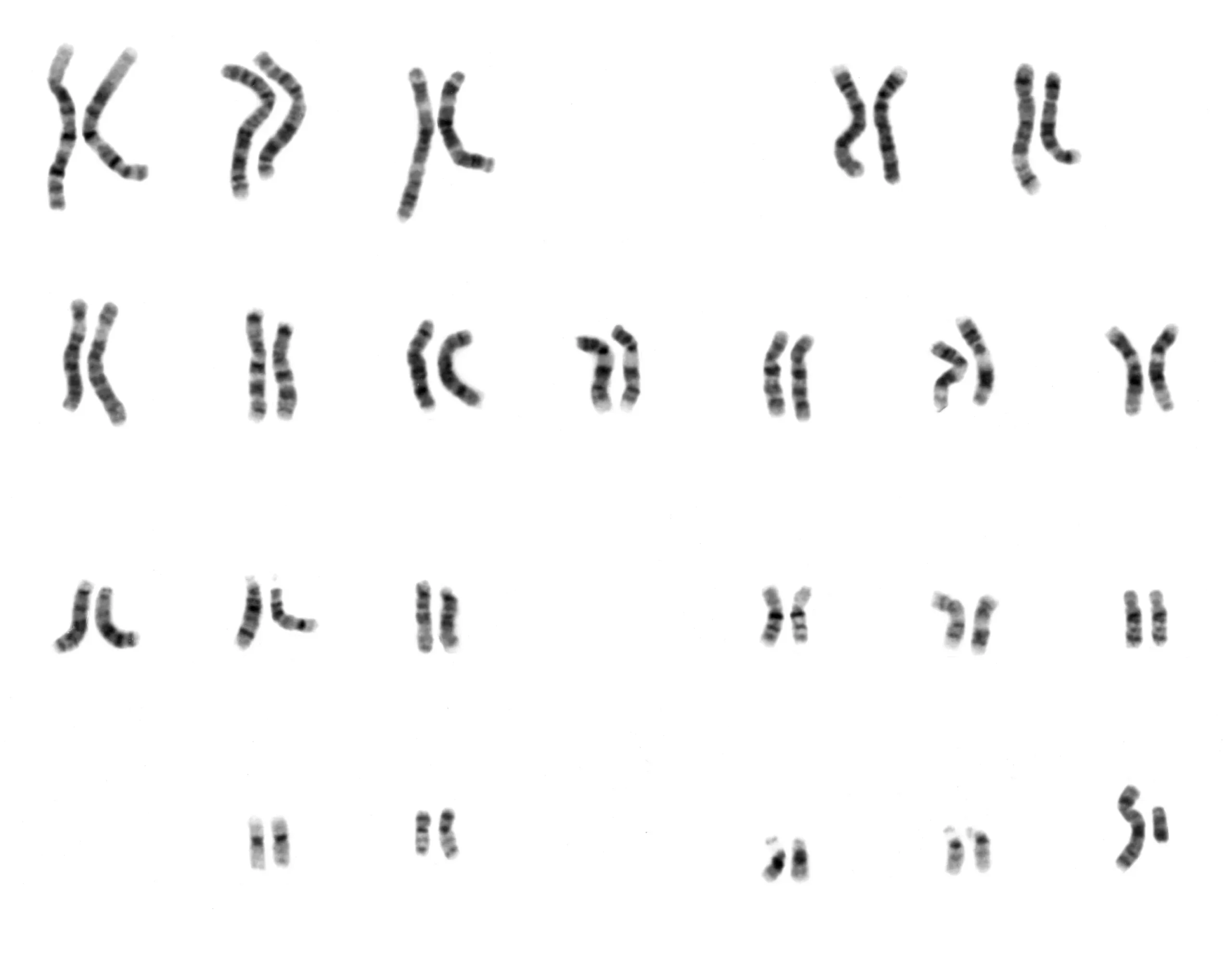
Karyotype image showing human chromosomes arranged in pairs, totaling 46 chromosomes in a standard layout.

A chromosome browser transforms a list of DNA matches into a visual map of shared segments across all 22 chromosomes. Understanding how to read that map — and how to use segment triangulation to confirm common ancestry — is one of the most powerful skills in genetic genealogy.

Share this:

  • Share on Facebook (Opens in new window) Facebook
  • Share on X (Opens in new window) X
  • Share on WhatsApp (Opens in new window) WhatsApp
  • Share on Mastodon (Opens in new window) Mastodon
  • Share on Tumblr (Opens in new window) Tumblr
  • Print (Opens in new window) Print
  • Share on Bluesky (Opens in new window) Bluesky

Read More »

What the Numbers Tell Us, Part Two: 160 Groups

No Comments
| Dillman Families

Sixty-six new Family Groups expand the Dillman dataset to 160 groups, revealing two distinct emigration waves with different causes, plus a stalled DNA project.

Share this:

  • Share on Facebook (Opens in new window) Facebook
  • Share on X (Opens in new window) X
  • Share on WhatsApp (Opens in new window) WhatsApp
  • Share on Mastodon (Opens in new window) Mastodon
  • Share on Tumblr (Opens in new window) Tumblr
  • Print (Opens in new window) Print
  • Share on Bluesky (Opens in new window) Bluesky

Read More »

Personal Ancestral File: The Grandfather of Genealogy Software

No Comments
| Sites and Software
Cover of PAF 5.2, Personal Ancestral File — the landmark free genealogy application developed by The Church of Jesus Christ of Latter-day Saints.

Personal Ancestral File (PAF) was the first widely distributed genealogy software program in history — a free application developed by The Church of Jesus Christ…

Share this:

  • Share on Facebook (Opens in new window) Facebook
  • Share on X (Opens in new window) X
  • Share on WhatsApp (Opens in new window) WhatsApp
  • Share on Mastodon (Opens in new window) Mastodon
  • Share on Tumblr (Opens in new window) Tumblr
  • Print (Opens in new window) Print
  • Share on Bluesky (Opens in new window) Bluesky

Read More »

DNA and Surname Projects: Getting More from Group Testing

No Comments
| Genetic Genealogy

If you have taken a Y-DNA test and are wondering what to do next, joining a surname project may be one of the highest-value steps available to you…

Share this:

  • Share on Facebook (Opens in new window) Facebook
  • Share on X (Opens in new window) X
  • Share on WhatsApp (Opens in new window) WhatsApp
  • Share on Mastodon (Opens in new window) Mastodon
  • Share on Tumblr (Opens in new window) Tumblr
  • Print (Opens in new window) Print
  • Share on Bluesky (Opens in new window) Bluesky

Read More »

AncestryDNA ThruLines: Promise vs. Reality

No Comments
| Industry News
AncestryDNA logo — © Ancestry.com Operations, Inc. Used for editorial purposes. Source: ancestry.com

If you have taken an AncestryDNA test and linked it to a family tree, you have almost certainly encountered ThruLines — Ancestry’s tool for suggesting how your DNA matches might connect…

Share this:

  • Share on Facebook (Opens in new window) Facebook
  • Share on X (Opens in new window) X
  • Share on WhatsApp (Opens in new window) WhatsApp
  • Share on Mastodon (Opens in new window) Mastodon
  • Share on Tumblr (Opens in new window) Tumblr
  • Print (Opens in new window) Print
  • Share on Bluesky (Opens in new window) Bluesky

Read More »

The Ships That Brought Them: Dillman Families at Sea

No Comments
| Dillman Families
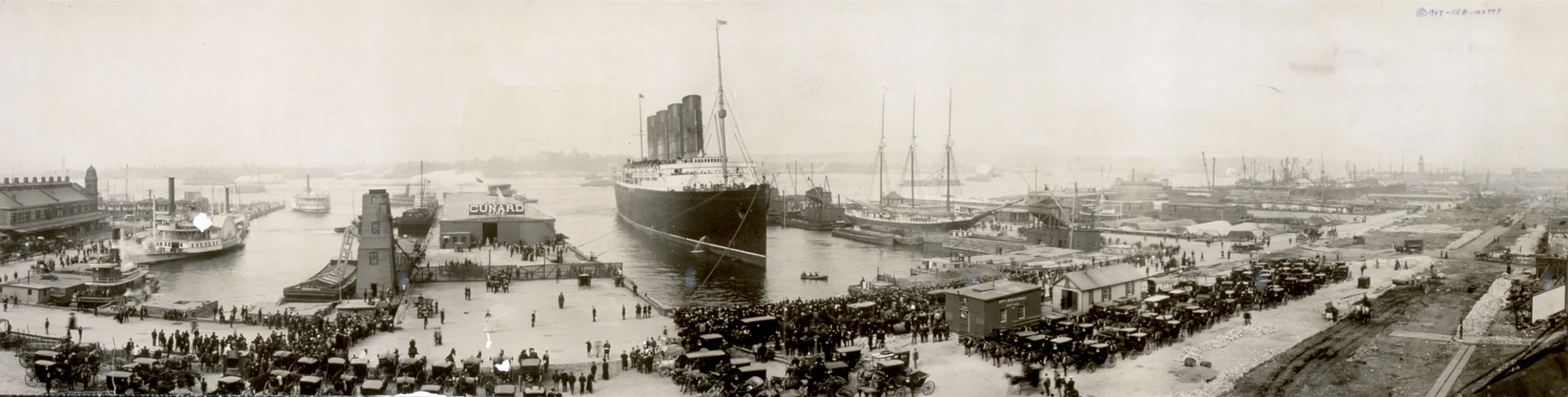
RMS Lusitania at the end of her record westbound Atlantic crossing voyage, 1907. A Dillman family group member arrived in New York aboard the Lusitania in 1908. The ship was torpedoed and sunk by German submarine U-20 on May 7, 1915, killing 1,198 of the 1,959 people aboard. Library of Congress. Public domain.

Every Dillman family in America arrived by water. From the Virtuous Grace in 1737 to the Lusitania in 1908, this article examines the ships and ports through which Dillman families crossed the Atlantic — Philadelphia, New Orleans, New York, and Halifax.

Share this:

  • Share on Facebook (Opens in new window) Facebook
  • Share on X (Opens in new window) X
  • Share on WhatsApp (Opens in new window) WhatsApp
  • Share on Mastodon (Opens in new window) Mastodon
  • Share on Tumblr (Opens in new window) Tumblr
  • Print (Opens in new window) Print
  • Share on Bluesky (Opens in new window) Bluesky

Read More »

MyHeritage Family Tree Builder: A Free Desktop Tool

No Comments
| Sites and Software
MyHeritage logo — © MyHeritage Ltd. Used for editorial purposes. Source: myheritage.com

MyHeritage Family Tree Builder is a free desktop genealogy application that has been available since 2004 — one of the longest-running continuously developed genealogy programs…

Share this:

  • Share on Facebook (Opens in new window) Facebook
  • Share on X (Opens in new window) X
  • Share on WhatsApp (Opens in new window) WhatsApp
  • Share on Mastodon (Opens in new window) Mastodon
  • Share on Tumblr (Opens in new window) Tumblr
  • Print (Opens in new window) Print
  • Share on Bluesky (Opens in new window) Bluesky

Read More »

Posts pagination

Previous 1 … 6 7 8 … 11 Next

Follow the DFA

Find new articles and announcements on our pages:

  • Facebook
  • Bluesky
  • Tumblr
  • Mastodon

Get New Articles by Email

New DFA articles, sent to your inbox.

Post Categories

  • DFA Most Wanted (16)
  • Dillman Families (15)
  • Dillman Genealogical Conference (2)
  • Genetic Genealogy (18)
  • Industry News (20)
  • Methodology & Standards (8)
  • Sites and Software (19)
  • Website News (4)

Recent Posts

  • MyHeritage’s GAIA Research Agent: What It Does With Your Tree and What It Doesn’t
  • Your DNA, Your Property? Five States Just Passed New Genetic Privacy Laws
  • Heredis: The Best Genealogy Software You’ve Never Heard Of (Unless You’re French)
  • DFA Most Wanted: Family Group 33
  • Endogamy: When Your DNA Matches Don’t Mean What They Seem

© Dillman Family Association 2026. Powered by WordPress