Skip to content
Dillman Family Association logo. © Dillman Family Association.

Dillman Family Association

Understanding the Heritage of Dillman Families and All Variant Spellings

Menu
  • Dillman Family Association
  • Start Here — New to Dillman Research?
  • Dillman DNA Project
    • Dillman DNA Participants
    • Family Group Sheets
    • Order A DNA Kit
    • Dillman DNA Project Donors
    • DNA Information Links
  • DFA Genealogical Conferences
  • Research Resources
    • The Dillman Surname
    • Dillman Family Settlement Concentrations and Migration Patterns
    • Dillman Family Association Library
    • Dillman Photographs
    • Helpful Tips and Hints
    • Military Links
    • Genealogical Will
    • Frequently Asked Questions
  • Reference & Resources
    • Quarterly Newsletter
    • DFA Newsletters
    • Dillman Bibliography: Published Genealogies and Family Histories
    • Discovering Dillman Families Throughout the World
  • Dillman Family Reunions
  • Forums
  • Join Us
    • Registration
    • Membership
  • DFA Blog
  • About DFA
    • Contact Us
    • DFA Officers and Committees
    • Data Collection and Privacy Policy at Dillman Family Association
  • Member Login
    • My Account
    • Password Reset
    • Profile
  • Dillman Family Research Tips

Category: Dillman Families

Statistical summaries, research findings, and data-driven articles about Dillman family groups documented by the Dillman Family Association.

What the Numbers Tell Us, Part Three: 199 Groups

No Comments
| Dillman Families

Part Two’s headline findings reverse outright: a new largest immigration window, and a supposedly empty three-year gap that wasn’t empty at all.
Share this:

  • Share on Facebook (Opens in new window) Facebook
  • Share on X (Opens in new window) X
  • Share on WhatsApp (Opens in new window) WhatsApp
  • Share on Mastodon (Opens in new window) Mastodon
  • Share on Tumblr (Opens in new window) Tumblr
  • Print (Opens in new window) Print
  • Share on Bluesky (Opens in new window) Bluesky

Like this:

Like Loading…

Read More »

Where They Went: Geographic Settlement Patterns of the Dillman Families

No Comments
| Dillman Families
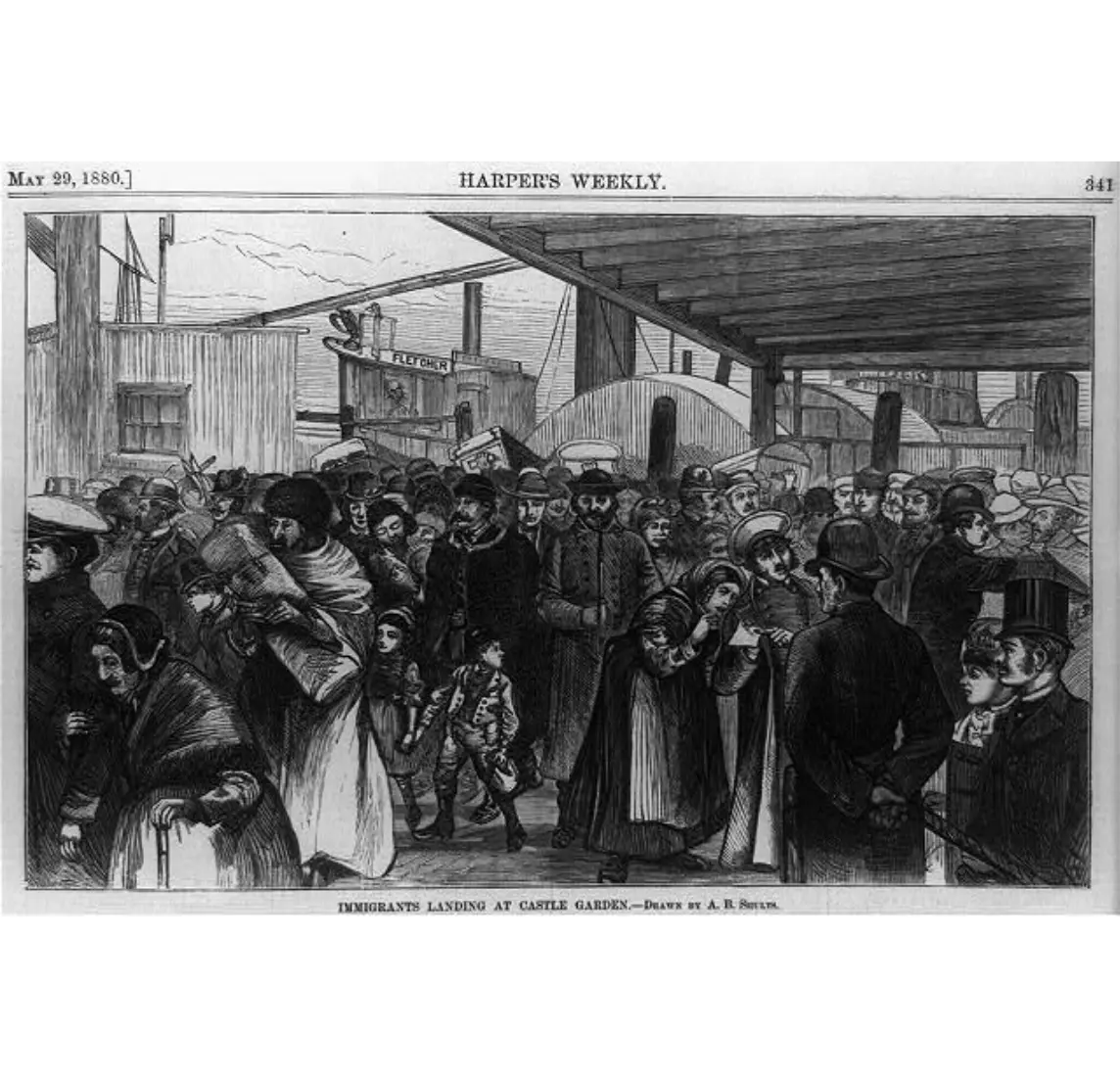
Historical illustration of Castle Garden, America's first official immigration processing station in New York, which operated from 1855 to 1890 before Ellis Island opened.

Of the 160 Dillman family groups documented in the DFA database, 106 trace their origins to Germany — concentrated in Hesse, Baden, and the Rhineland. Tracing where they went reveals a clear pattern: New York as the gateway, Pennsylvania as a transit state, and the Midwest as the primary destination, with St. Louis the most frequently mentioned inland city of all.

Share this:

  • Share on Facebook (Opens in new window) Facebook
  • Share on X (Opens in new window) X
  • Share on WhatsApp (Opens in new window) WhatsApp
  • Share on Mastodon (Opens in new window) Mastodon
  • Share on Tumblr (Opens in new window) Tumblr
  • Print (Opens in new window) Print
  • Share on Bluesky (Opens in new window) Bluesky

Like this:

Like Loading…

Read More »

The Dillman DNA Project Needs You: Here’s Why (and How)

No Comments
| Dillman Families

199 documented family groups, but only 21 in the DNA project. Here’s why Y-DNA testing matters here, and how to help close the gap.

Share this:

  • Share on Facebook (Opens in new window) Facebook
  • Share on X (Opens in new window) X
  • Share on WhatsApp (Opens in new window) WhatsApp
  • Share on Mastodon (Opens in new window) Mastodon
  • Share on Tumblr (Opens in new window) Tumblr
  • Print (Opens in new window) Print
  • Share on Bluesky (Opens in new window) Bluesky

Like this:

Like Loading…

Read More »

What’s in a Name: Naming Patterns in the Dillman Family Groups

No Comments
| Dillman Families
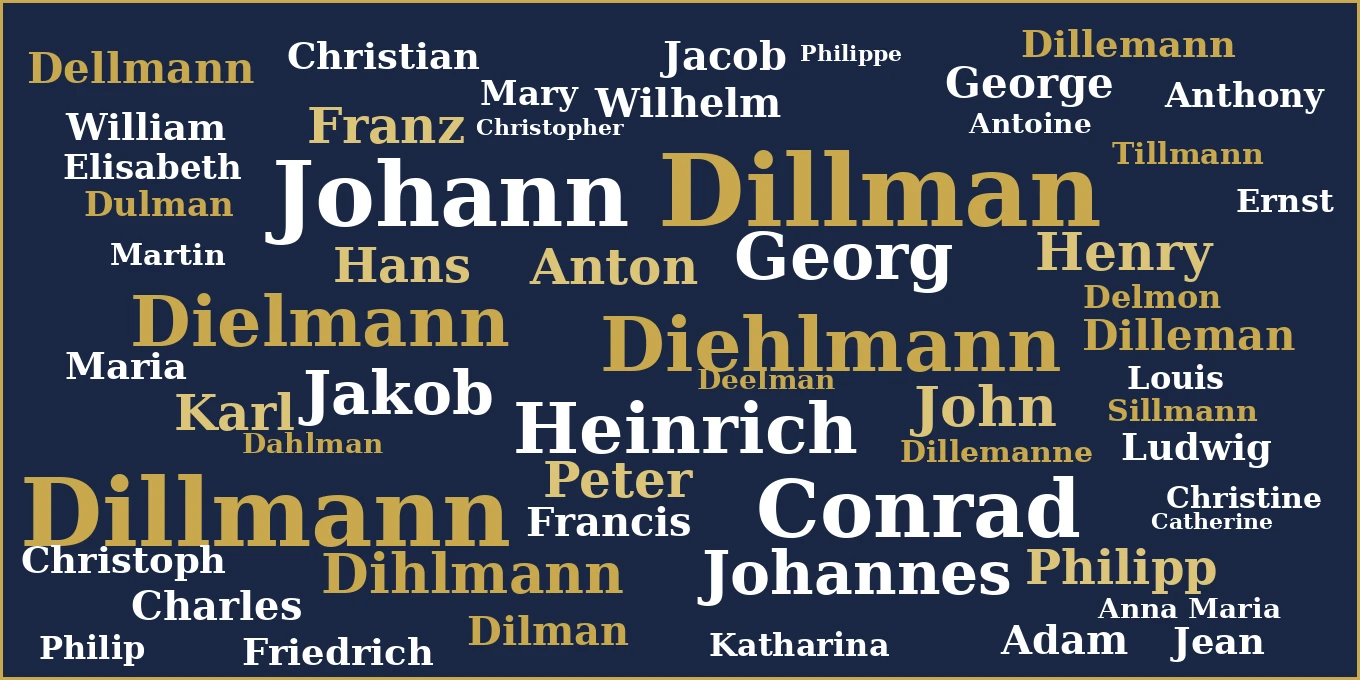
Word cloud of many German names on a dark blue background; largest names include Johann, Dillmann, Diehlmann, Conrad, Johannes, Heinrich.

The 160 family groups in the DFA database reveal consistent naming patterns across two centuries of Dillman migration — from the dominance of Johann in German records to the predictable anglicization that turned Heinrich into Henry and Georg into George at the American border.

Share this:

  • Share on Facebook (Opens in new window) Facebook
  • Share on X (Opens in new window) X
  • Share on WhatsApp (Opens in new window) WhatsApp
  • Share on Mastodon (Opens in new window) Mastodon
  • Share on Tumblr (Opens in new window) Tumblr
  • Print (Opens in new window) Print
  • Share on Bluesky (Opens in new window) Bluesky

Like this:

Like Loading…

Read More »

What the Numbers Tell Us, Part Two: 160 Groups

No Comments
| Dillman Families

Sixty-six new Family Groups expand the Dillman dataset to 160 groups, revealing two distinct emigration waves with different causes, plus a stalled DNA project.
Share this:

  • Share on Facebook (Opens in new window) Facebook
  • Share on X (Opens in new window) X
  • Share on WhatsApp (Opens in new window) WhatsApp
  • Share on Mastodon (Opens in new window) Mastodon
  • Share on Tumblr (Opens in new window) Tumblr
  • Print (Opens in new window) Print
  • Share on Bluesky (Opens in new window) Bluesky

Like this:

Like Loading…

Read More »

The Ships That Brought Them: Dillman Families at Sea

No Comments
| Dillman Families
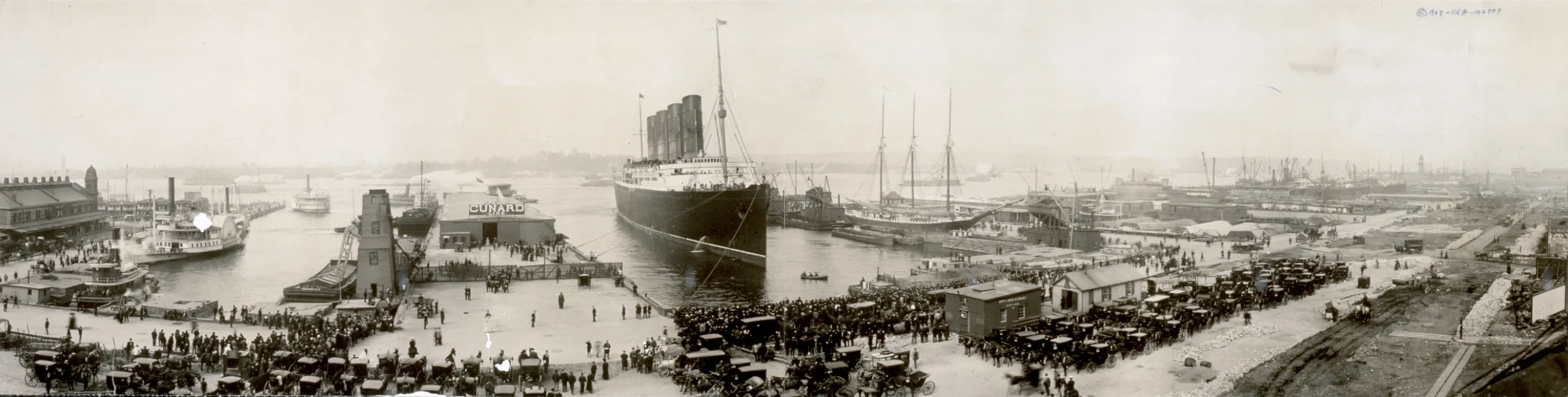
RMS Lusitania at the end of her record westbound Atlantic crossing voyage, 1907. A Dillman family group member arrived in New York aboard the Lusitania in 1908. The ship was torpedoed and sunk by German submarine U-20 on May 7, 1915, killing 1,198 of the 1,959 people aboard. Library of Congress. Public domain.

Every Dillman family in America arrived by water. From the Virtuous Grace in 1737 to the Lusitania in 1908, this article examines the ships and ports through which Dillman families crossed the Atlantic — Philadelphia, New Orleans, New York, and Halifax.
Share this:

  • Share on Facebook (Opens in new window) Facebook
  • Share on X (Opens in new window) X
  • Share on WhatsApp (Opens in new window) WhatsApp
  • Share on Mastodon (Opens in new window) Mastodon
  • Share on Tumblr (Opens in new window) Tumblr
  • Print (Opens in new window) Print
  • Share on Bluesky (Opens in new window) Bluesky

Like this:

Like Loading…

Read More »

Faith and Migration: Religion in the Dillman Family Groups

No Comments
| Dillman Families
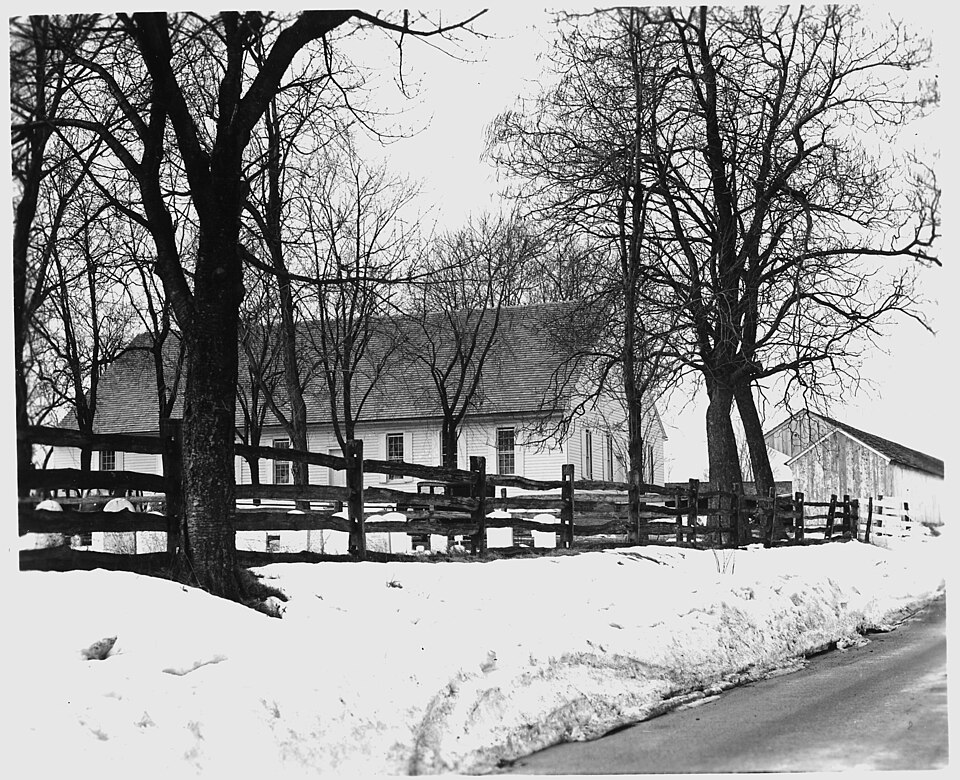
Meeting house of the Weaverland Conference Mennonites near New Holland, Lancaster County, Pennsylvania. George Dillman (Group 89, born 1801) and his wife Sarah are buried in the Weaverland Mennonite Cemetery in Earl Township, Lancaster County. US National Archives. Public domain.

Faith was not merely a comfort to German immigrants — for many Dillman families it was the reason they left, the network that received them, and the community that determined where they settled. This article examines the religious connections documented across the first 94 family groups.
Share this:

  • Share on Facebook (Opens in new window) Facebook
  • Share on X (Opens in new window) X
  • Share on WhatsApp (Opens in new window) WhatsApp
  • Share on Mastodon (Opens in new window) Mastodon
  • Share on Tumblr (Opens in new window) Tumblr
  • Print (Opens in new window) Print
  • Share on Bluesky (Opens in new window) Bluesky

Like this:

Like Loading…

Read More »

Going Back: Return Migration in the Dillman Families

No Comments
| Dillman Families
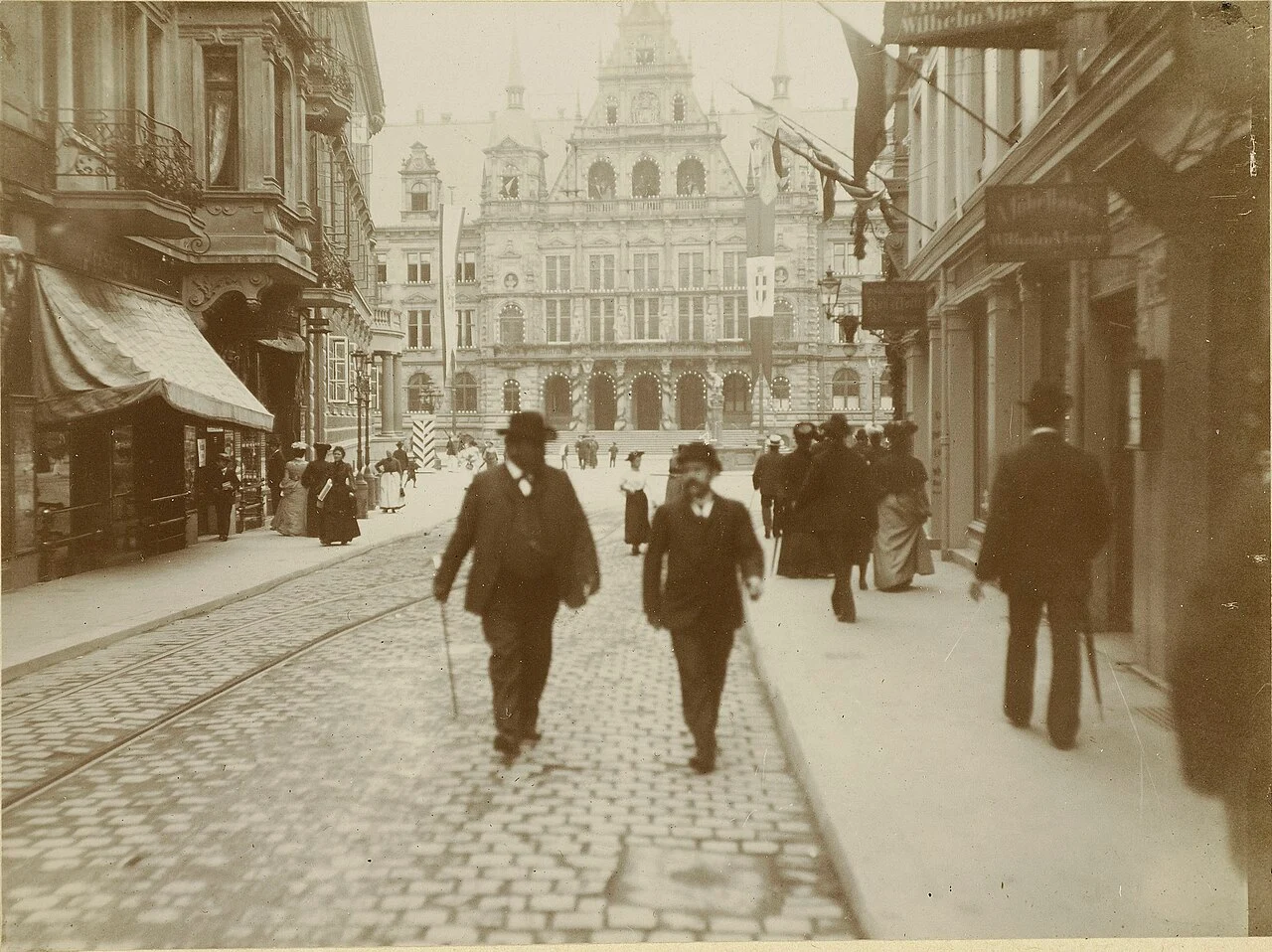
Wiesbaden, Germany, photographed by Julius Gujer, 1904-1905. Josefina Elisabetha Dillmann (Group 12) emigrated from New York to Germany and married in Wiesbaden in 1905 — the same year this photograph was taken. She lived out the remainder of her life there, dying in December 1948. Public domain.

Not every immigrant who crossed the Atlantic intended to stay. Some went back within months. Some spent decades in America before returning. Some were born in the New World and chose the Old. This article examines the Dillman families who went the other way.
Share this:

  • Share on Facebook (Opens in new window) Facebook
  • Share on X (Opens in new window) X
  • Share on WhatsApp (Opens in new window) WhatsApp
  • Share on Mastodon (Opens in new window) Mastodon
  • Share on Tumblr (Opens in new window) Tumblr
  • Print (Opens in new window) Print
  • Share on Bluesky (Opens in new window) Bluesky

Like this:

Like Loading…

Read More »

Soldiers: Dillman Families at War

No Comments
| Dillman Families
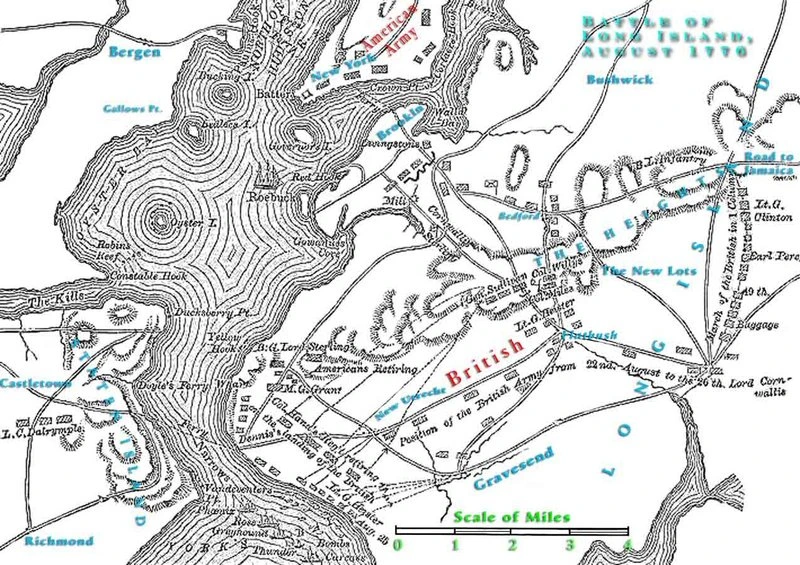
Map of the Battle of Long Island, August 27, 1776, showing British and American force positions. George Adam Dillmann (Group 2a) fought in this engagement as a Pennsylvania rifleman before being captured and pressed into British service. Published in Edward J. Lowell, The Hessians and the other German Auxiliaries of Great Britain in the Revolutionary War (Harper and Brothers, 1884). Public domain.

From a Pennsylvania rifleman captured at the Battle of Long Island in 1776 to a Soviet Army prisoner who survived a Nazi prison camp, Dillman families served — and sometimes chose not to serve — in five wars across two centuries.

Share this:

  • Share on Facebook (Opens in new window) Facebook
  • Share on X (Opens in new window) X
  • Share on WhatsApp (Opens in new window) WhatsApp
  • Share on Mastodon (Opens in new window) Mastodon
  • Share on Tumblr (Opens in new window) Tumblr
  • Print (Opens in new window) Print
  • Share on Bluesky (Opens in new window) Bluesky

Like this:

Like Loading…

Read More »

What They Did: Trades and Professions of Dillman Families

No Comments
| Dillman Families

When Dillman families crossed the Atlantic, they brought their trades with them. This article examines the working lives documented across 94 family groups — from tailors and piano makers to stonemasons and toymakers…

Share this:

  • Share on Facebook (Opens in new window) Facebook
  • Share on X (Opens in new window) X
  • Share on WhatsApp (Opens in new window) WhatsApp
  • Share on Mastodon (Opens in new window) Mastodon
  • Share on Tumblr (Opens in new window) Tumblr
  • Print (Opens in new window) Print
  • Share on Bluesky (Opens in new window) Bluesky

Like this:

Like Loading…

Read More »

Posts pagination

1 2 Next

Post Categories

  • DFA Most Wanted (8)
  • Dillman Families (11)
  • Dillman Genealogical Conference (2)
  • Genetic Genealogy (14)
  • Industry News (15)
  • Methodology & Standards (4)
  • Sites and Software (13)
  • Website News (2)

Recent Posts

  • DFA Most Wanted: Family Group 27
  • Visual Phasing: Mapping Your Chromosomes to Specific Grandparents
  • Timelines: Catching Contradictions Before They Catch You
  • What the Numbers Tell Us, Part Three: 199 Groups
  • DFA Most Wanted: Family Group 25

© Dillman Family Association 2026. Powered by WordPress

%d