
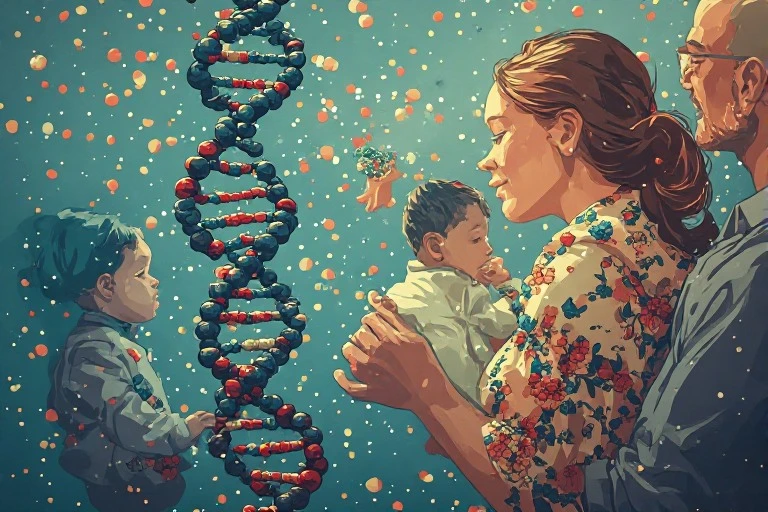
Before consumer DNA testing existed, an adoptee searching for biological family was dependent on sealed records, cooperative intermediaries, and luck. The records existed — birth certificates, adoption files, hospital records — but most were legally inaccessible, often for decades. That situation has changed more dramatically than almost any other development in genealogy over the past fifteen years, and the engine of that change has been DNA testing.
The adoptee search community was not a passive beneficiary of consumer genetic genealogy’s rise. In many respects, adoptees and the volunteers who help them were among the most sophisticated early users of DNA testing technology, developing techniques and tools that the broader genealogy community later adopted. The Leeds Method, discussed earlier in this series, was itself developed in the context of a DNA surprise case. The community around adoptee search has been, and continues to be, one of the most technically innovative communities in the field.
How DNA Has Changed the Search
Before DNA, an adoptee’s options for finding biological family depended almost entirely on whether the relevant records were accessible — and in most American states, original birth certificates were sealed at adoption and remained sealed for decades after. State laws varied enormously: some states allowed adult adoptees to access their original birth certificates, others required court orders, others maintained sealed records regardless of the adoptee’s age or circumstances.
DNA testing bypassed the records entirely. Genetic genealogy DNA tests have helped thousands of adoptees get around sealed records, lies, and coverups to identify and reunite with biological family members. An adoptee who tests at AncestryDNA and matches a first cousin once removed — someone they have never met and who may not know about the adoption — can use that match to work backward through the biological family tree. The cousin’s family is documented; the adoptee’s place in that family can be identified through documentary research on the cousin’s line, without any cooperation from biological parents and without access to any sealed record.
Genetic genealogists specialize in identifying ancestors for people with no access to information about one or both biological parents. Many adoptees are not interested in identifying biological parents but would like to know more about their other ancestors. For people who are adopted, family history can feel like a mystery, particularly if they don’t even know their biological parents’ names.
The Techniques
The DNA tools most valuable for adoptee searches build directly on the techniques covered elsewhere in this series.
Autosomal testing and match analysis is the starting point. An adoptee who tests at AncestryDNA gains access to the largest consumer DNA database available, which maximizes the probability of matching a relatively close relative. Most adoptees will have many distant cousin matches, and clustering techniques can help identify common ancestors more efficiently. But this still requires significant genealogical research with birth and marriage records, census records, and old newspaper obituaries.
DNA clustering (the Leeds Method) is particularly valuable in the adoptee context. By grouping matches into clusters that reflect shared ancestral lines, a researcher can identify which cluster likely represents the maternal and paternal biological families — even without knowing anything about those families in advance. The four-cluster model maps directly onto the four biological grandparent lines, giving adoptees an organizational framework for an otherwise overwhelming match list.
Mirror trees are a technique specific to adoptee research. Rather than building your own tree, you build a “mirror tree” — a replica of a match’s documented family tree, attached to yourself as if you were a member of that family. Hints and record matches generated for that mirror tree then apply to your biological ancestry, surfacing records you would not otherwise find.
Multi-platform testing is essentially required for serious adoptee searches. Adoptees who take any DNA test at FamilyTreeDNA should also join the free Adoptee Project. Testing at or uploading to AncestryDNA, FamilyTreeDNA, MyHeritage, and GEDmatch maximizes database coverage — a biological relative who hasn’t tested at Ancestry may have tested at FTDNA, and missing that match could mean years of additional delay.
The Volunteer Networks
One of the most remarkable features of the adoptee search community is the infrastructure of volunteer assistance that has developed around it.
DNA Detectives (a Facebook group with tens of thousands of members) specializes in helping adoptees and others with unknown parentage identify biological family through DNA matching. Its volunteer administrators include some of the most skilled genetic genealogists in the field, and they assist with cases ranging from straightforward first-cousin-match analyses to complex situations involving multiple generations of non-paternity events.
Search Squad is a similar volunteer network with particular expertise in cases involving law enforcement and missing persons connections.
ISOGG’s adoptee resources provide technical guidance and tool recommendations for those who prefer to learn the techniques themselves.
Professional genetic genealogists who specialize in unknown parentage cases are also available for hire, and for complex cases — those where available matches are distant, trees are sparse, or the biological family has reason to obscure the connection — professional assistance can be the difference between a resolved case and years of continued searching.
The Ethical Dimensions
DNA testing for adoptee search is uniquely ethically complex because the testing decision affects not just the tester but every biological relative whose DNA is partially revealed by the match. Because DNA testing impacts multiple individuals, not just the tester, researchers must approach each case with care. Informed consent means individuals should understand how their DNA data may be used. Privacy protection means sensitive findings must be handled confidentially.
The most significant ethical tension is between the adoptee’s genuine interest in knowing their biological identity and the privacy interests of biological relatives who may not know about the adoption or may have made deliberate choices about non-disclosure. A biological parent who placed a child for adoption and has kept that fact private for forty years has a legitimate interest in privacy. An adult adoptee has a legitimate interest in knowing their own biological origins. These interests are in genuine tension, and there is no policy position that fully resolves it.
Finding information about your biological family can lead to many different outcomes. Birth parents have no say in what information is or is not provided through DNA testing services. The ethical approach that most professional genetic genealogists and volunteer networks follow involves confirming a biological connection before making any contact, reaching out through intermediaries rather than directly, being prepared for a range of responses from enthusiastic welcome to firm refusal, and accepting that refusal as the biological relative’s right.
The DNA surprise — discovering unexpected parentage that contradicts what you believed about your family — affects not only adoptees but any family where non-paternity events or other family secrets exist. The techniques used for adoptee search are the same ones that can reveal these surprises to anyone who tests, which is why the ethical frameworks developed by the adoptee search community have relevance far beyond adoption specifically.
For Dillman Researchers
The Dillman surname research community is likely to encounter adoptee-adjacent situations in the course of DNA project work. Non-paternity events — situations where a man raised a child who was not biologically his — appear in genealogical DNA data at a rate of roughly 1–3% per generation in historical European populations. Across the 160 family groups in the DFA database and the generations represented, some number of apparent Dillman male-line descendants will show Y-DNA results that don’t match the expected Dillman haplogroup pattern — not because the paper trail is wrong, but because a non-paternity event occurred at some point in the line.
Handling these discoveries with the same care that the adoptee search community has developed over a decade of practice is the appropriate standard: confirm the finding, document it carefully, reach out to affected researchers privately and sensitively, and allow them to determine what to do with the information.
Sources
AncestryDNA. “AncestryDNA Testing for Adoptees.” Ancestry. Accessed July 2026. ancestry.com.
DNA Favorites. “Adoptee Resources.” DNA Favorites. Accessed July 2026. dnafavorites.com.
DNA Testing Adviser. “The Adoption Search Guide: How DNA Can Find Your Biological Parents.” DNA Testing Adviser. Accessed July 2026. dna-testing-adviser.com.
Davis DNA and Family Research. “How Genetic Genealogy Is Helping Adoptees Find Biological Family.” April 27, 2026. davisdna.com.
National Council for Adoption. “Genetic Testing for Adoptees: Key Considerations and Benefits.” March 26, 2025. adoptioncouncil.org.
Note: This post was researched and written with the assistance of artificial intelligence (AI). All content has been reviewed for accuracy as of September 2026. All errors are the responsibility of the author.
Discover more from Dillman Family Association
Subscribe to get the latest posts sent to your email.