
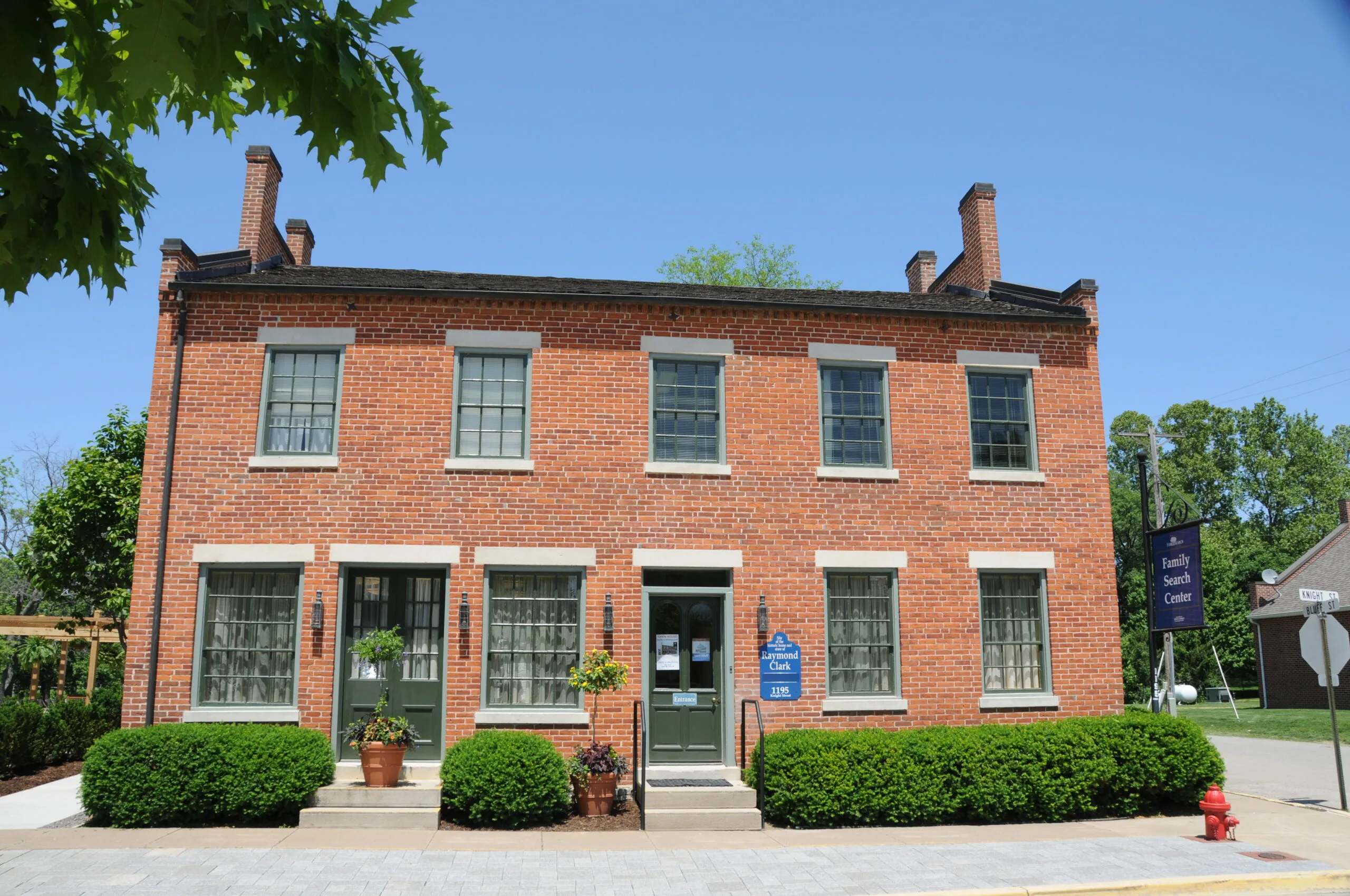
Image: Opening of the Nauvoo FamilySearch Center, May 2012. FamilySearch Centers are operated by The Church of Jesus Christ of Latter-day Saints. Used for editorial purposes.
For generations of genealogical researchers, a visit to the local Family History Center (FHC) was a rite of passage — the place where you first learned to thread a microfilm reader, where a knowledgeable volunteer helped you crack a brick wall, and where records unavailable anywhere else could be accessed for free in a quiet room designed specifically for the purpose. Those centers, operated by The Church of Jesus Christ of Latter-day Saints (LDS) through its FamilySearch division, formed the most extensive network of genealogical research facilities ever assembled — at their peak numbering more than 5,700 locations[1] in over 100 countries.
That network is contracting, and for many researchers the local center they relied on is already gone. Understanding why, what has replaced it, and what genuine gaps remain is important for any genealogist who depends on FamilySearch resources — which, given that FamilySearch hosts the world’s largest collection of free genealogical records, means most serious researchers.
A Brief History of the Family History Center
The Family History Center program grew out of the LDS Church’s century-long commitment to genealogical research, rooted in its theological doctrine of baptism for the dead — a practice requiring documented ancestral lines. The Church established the Genealogical Society of Utah in 1894, began systematic microfilming of historical records worldwide in the 1930s, and opened the Family History Library (FHL) in Salt Lake City, Utah, in 1894 in its original form and in its current location in 1985. The FHL remains the largest genealogical library in the world, housing billions of records in a facility open to the public at no charge.
The satellite center network — originally called Branch Genealogical Libraries, later Family History Centers — emerged as a way to extend access to the FHL’s holdings without requiring researchers to travel to Salt Lake City. Centers were established in LDS meetinghouses around the world, staffed by trained volunteers, and equipped with microfilm readers and collections of locally relevant films loaned from the FHL’s Granite Mountain Records Vault. The model was simple and effective: researchers could order microfilms of records from virtually anywhere in the world, have them shipped to their local center, and view them there at no cost beyond a nominal duplication fee.
At their peak, FHCs provided access not just to microfilm but to a range of subscription databases — Ancestry.com, Newspapers.com, Fold3, and others — available free of charge on center computers, funded through FamilySearch’s institutional agreements with those providers. For researchers who could not afford individual subscriptions to these services, the centers were an invaluable equalizer.
🎞️ The Pivot That Changed Everything: The End of Microfilm
The single most consequential event in the transformation of the FHC network was FamilySearch’s decision to discontinue its microfilm circulation service, announced in June 2017 and completed on September 8[2], 2017. The decision was the logical endpoint of a digitization initiative that had been underway for years: FamilySearch had been systematically converting its 2.4 million rolls of microfilm to digital images, and by 2017 had digitized more than 1.5 billion images from the most-requested collections. By September 2021, all microfilms[3] stored in the Granite Mountain Records Vault had been digitized and digitally preserved.
The implications for the center network were profound. The defining reason to visit a Family History Center — access to microfilmed records unavailable anywhere else — had been the physical film itself. As those films became digital images accessible online from any computer, the rationale for maintaining thousands of physical locations staffed by trained volunteers became significantly weaker. A researcher in rural Indiana no longer needed to drive to a meetinghouse to order a microfilm of a German church register from 1750; they could access it from home at familysearch.org, often for free.
This was unambiguously good news for most researchers. But it carried a significant caveat that is still causing problems in 2026: not all digitized records are accessible from home. A substantial number of digitized images remain restricted to viewing only at FamilySearch Centers or FamilySearch Affiliate Libraries, due to contractual agreements with the original record custodians — civil authorities, church archives, and governments around the world who granted FamilySearch permission to microfilm their records under specific conditions that did not anticipate home internet access. When centers close without a nearby affiliate library to fill the gap, those restricted records become effectively inaccessible to local researchers.
The Rebranding and Consolidation
On January 10, 2023[4], the LDS Church announced that the Family History Library in Salt Lake City would be renamed the FamilySearch Library, and that all FHCs worldwide would be renamed FamilySearch Centers (FSCs). The rebranding reflected the broader shift toward digital access — the FamilySearch brand, rather than the family history center identity, was becoming the primary point of engagement for researchers.
The consolidation accompanying the rebranding has been significant. Centers have been closing across the United States and internationally, driven by several converging factors: the reduced demand following microfilm digitization, the difficulty of recruiting and retaining trained volunteers for facilities with diminishing foot traffic, the LDS Church’s repurposing of meetinghouse space for other uses, and the broader digital transition that has moved most genealogical research to the home computer. Community forums on the FamilySearch website document closures across multiple states — a thread from March 2025 noted that an Arizona resident had moved to Iowa and found no open FSCs in either state.
The hours at remaining centers have also contracted significantly. Where centers once operated several days per week with extended hours, many now operate only by appointment or for a single hour per week — a schedule that effectively makes them inaccessible for most working researchers. FamilySearch’s own community forums contain numerous threads from frustrated researchers who arrived at a listed center during posted hours to find it closed.
What Has Replaced the Center Network
FamilySearch has developed several pathways to fill the gap left by contracting FSC availability, with varying degrees of success.
Home access expansion: The most significant development is the ongoing expansion of records accessible directly from home at familysearch.org. FamilySearch’s Full-Text Search, covered in our AI Tools article, is making billions of previously browse-only records searchable without a physical visit. As contractual restrictions are renegotiated — a slow but ongoing process — more records are being released for home access. The trajectory is clearly toward expanding home access, but the timeline for any specific collection depends entirely on the cooperation of the original record custodian.
FamilySearch Affiliate Libraries: Any public library, genealogical society, museum, or similar institution can apply to become a FamilySearch Affiliate Library (AL). Affiliate libraries receive access to a broader tier of restricted records than home users — not the most tightly restricted collections, but significantly more than is available at home. Many public library systems have pursued affiliate status, and the FamilySearch website provides a locator to find the nearest affiliate library. For researchers whose local FSC has closed, checking whether the nearest public library has affiliate status is the first practical step.
Meetinghouse access: In April 2025, FamilySearch clarified[5] that members of the public — not just LDS Church members — can use their own laptops at any LDS meetinghouse that has the FamilySearch Portal installed, provided they connect to the church’s Liahona WiFi network. This significantly expands the number of locations where restricted records can be accessed, though it requires knowing which meetinghouses have the portal installed and coordinating access to a building that is not a public facility.
Remote assistance: FamilySearch offers a Find a FamilySearch Consultant service that connects researchers with trained volunteers who can provide one-on-one guidance remotely — replicating the expert assistance that was a key feature of in-person center visits. This does not solve the access problem for restricted records but does preserve the educational and guidance function of the center network.
The FamilySearch Library in Salt Lake City: The main FamilySearch Library remains fully operational and provides the highest level of access to restricted records of any facility in the world. For researchers with the ability to travel to Salt Lake City, the library is an extraordinary resource. For those who cannot make the trip, the library offers a limited record lookup service for specific queries.
The Persistent Gap: Restricted Records
The unresolved problem in the center network’s decline is the restricted records gap. A meaningful number of digitized records — the exact scope is not publicly quantified by FamilySearch — remain viewable only at FSCs or affiliate libraries due to contractual restrictions with original record custodians. When a researcher in a community without a functioning FSC or affiliate library needs to access one of these records, they have limited options: travel to a functioning center or the Salt Lake City library, identify a nearby affiliate library, or wait for FamilySearch to renegotiate the access restrictions — a process that may take years or may never happen for some collections.
For Dillman Family Association (DFA) members researching German and Swiss church records, this gap is directly relevant. Some German Catholic and Lutheran church records that FamilySearch microfilmed under agreements with German archival authorities remain restricted to center or affiliate library access due to German data privacy regulations. Researchers who previously accessed these records at a local center may find that pathway closed if their center has shut down.
What Researchers Should Do Now
Find your nearest open FSC. The FamilySearch website at familysearch.org/fhcenters/locations/ provides a locator showing currently operating centers. Hours vary widely and are not always accurate — calling ahead before visiting is strongly advisable.
Identify your nearest affiliate library. The same locator shows affiliate libraries, marked with an orange icon. Affiliate libraries typically have longer hours, larger facilities, and more consistent staffing than FSCs, and provide access to a broader range of restricted records than home access. For most researchers, the affiliate library has become the primary point of in-person FamilySearch access.
Check what records require in-person access. When viewing a record in the FamilySearch catalog, the access level is indicated — whether it is accessible from home, at an affiliate library, or only at an FSC or the Salt Lake City library. Knowing which specific collections you need will help you determine whether in-person access is essential for your research.
Explore meetinghouse access. If you are in an area without a functioning FSC or affiliate library, contact local LDS Church leadership about whether a nearby meetinghouse has the FamilySearch Portal installed and whether public access is available.
Consider a research trip. For researchers with significant work to do in restricted collections, a dedicated trip to the FamilySearch Library in Salt Lake City may be the most efficient option. The library is free, extraordinarily well-staffed, and provides access to collections unavailable anywhere else.
Looking Ahead
The long-term trajectory of the FSC network is toward further contraction, not expansion. FamilySearch’s strategic direction is clearly online-first, and the pace of home access expansion — while slower than many researchers would like — is moving in the right direction. The affiliate library program represents the most sustainable model for in-person access going forward, and encouraging local public libraries and genealogical societies to pursue affiliate status is one of the most constructive things the genealogy community can do to preserve in-person access to restricted records.
For DFA members, the Dillman DNA Project and broader Dillman research community benefit from sharing information about which local resources — FSCs, affiliate libraries, and other access points — remain available in the areas where Dillman research is most concentrated.
FamilySearch Centers (formerly Family History Centers) are operated by The Church of Jesus Christ of Latter-day Saints through FamilySearch International. A locator for operating centers and affiliate libraries is available at familysearch.org/fhcenters/locations/ Microfilm circulation was discontinued in September 2017; all microfilms were digitized by September 2021. Some digitized records remain restricted to in-person access at FSCs, affiliate libraries, or the FamilySearch Library in Salt Lake City due to contractual agreements with original record custodians.
Sources
- FamilySearch, “FamilySearch Centers,” familysearch.org/fhcenters/locations/ (accessed May 2026).
- FamilySearch, “Microfilm Discontinuation,” June 2017, familysearch.org/en/wiki/Family_History_Library (accessed May 2026).
- FamilySearch, “Granite Mountain Records Vault,” familysearch.org/en/wiki/Granite_Mountain_Records_Vault (accessed May 2026).
- FamilySearch, “FamilySearch Library Rebranding,” January 2023, familysearch.org (accessed May 2026).
- FamilySearch Community, “Meetinghouse Portal Access,” April 2025, community.familysearch.org (accessed May 2026).
AI Disclosure: This article was researched and written with the assistance of Claude, an AI assistant developed by Anthropic. All facts have been reviewed for accuracy, but readers are encouraged to verify information independently, particularly for time-sensitive details such as center locations, hours, and access policies.
Discover more from Dillman Family Association
Subscribe to get the latest posts sent to your email.